LiFePO4 vs lithium ion: which power station battery lasts longer?
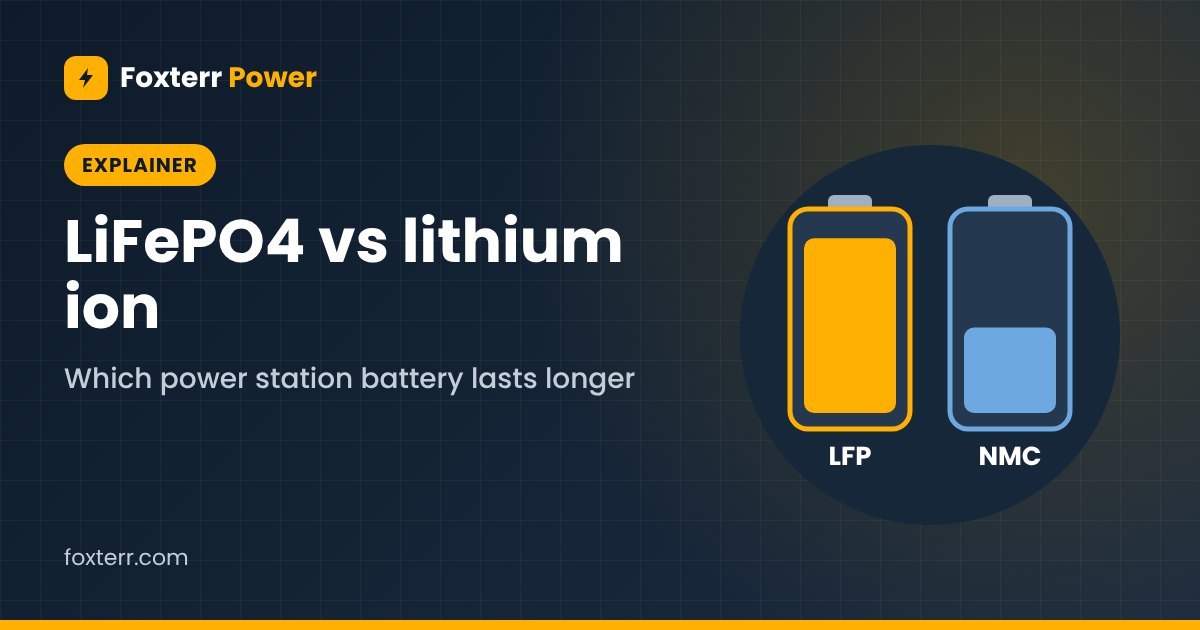
Look at the specs of any power station and you will see one of two battery types: LiFePO4 (lithium iron phosphate, often written LFP) or lithium ion, usually NMC. That one line decides how many years the station will last. Here is what it means for your money.
Foxterr Power is reader supported. We may earn a commission when you buy through links on our site, at no extra cost to you. How we make money.
In this guide
The short answer
For home backup, LiFePO4 is usually the better buy. It lasts several times more charge cycles and is more resistant to overheating. NMC lithium ion is lighter and more compact, which matters more for hiking and travel than for a unit that lives in your closet.
Lifespan: cycles explained
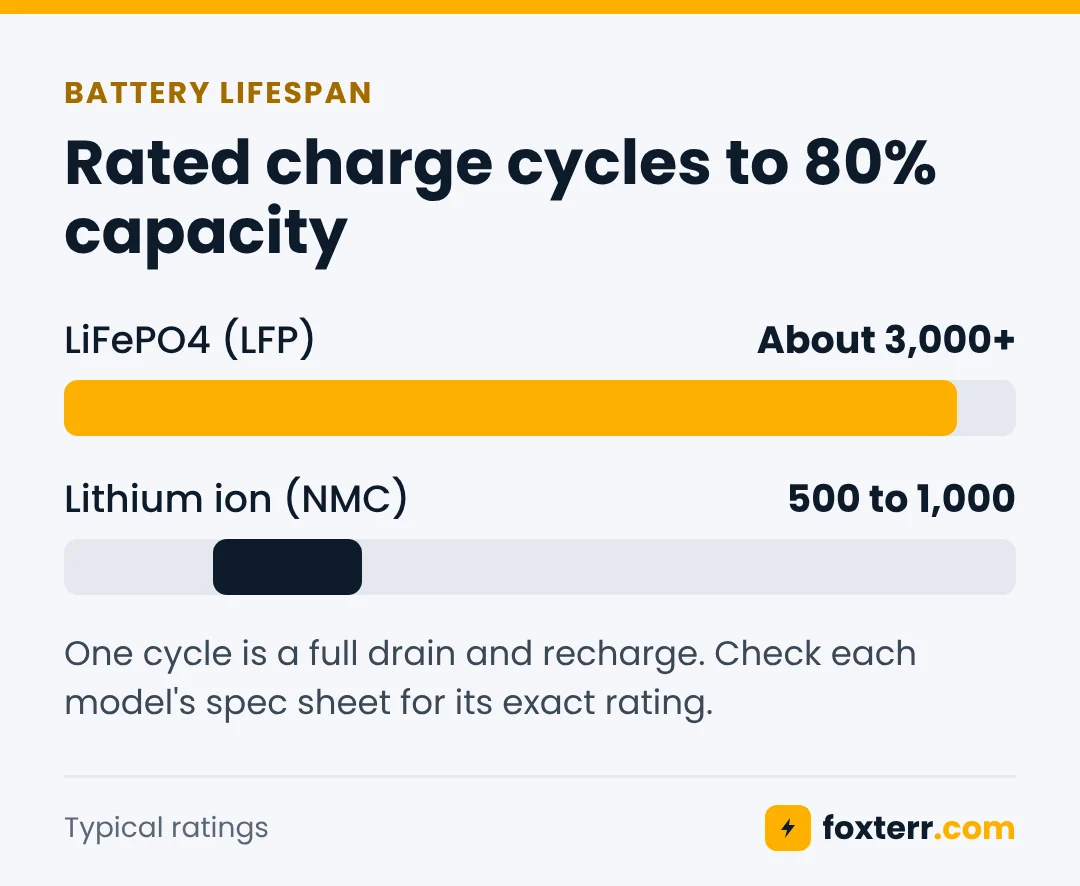
Battery life is counted in charge cycles: one full drain and recharge. Many LiFePO4 power stations are rated for around 3,000 cycles or more before falling to 80 percent of their original capacity. Many NMC models are rated for roughly 500 to 1,000 cycles.
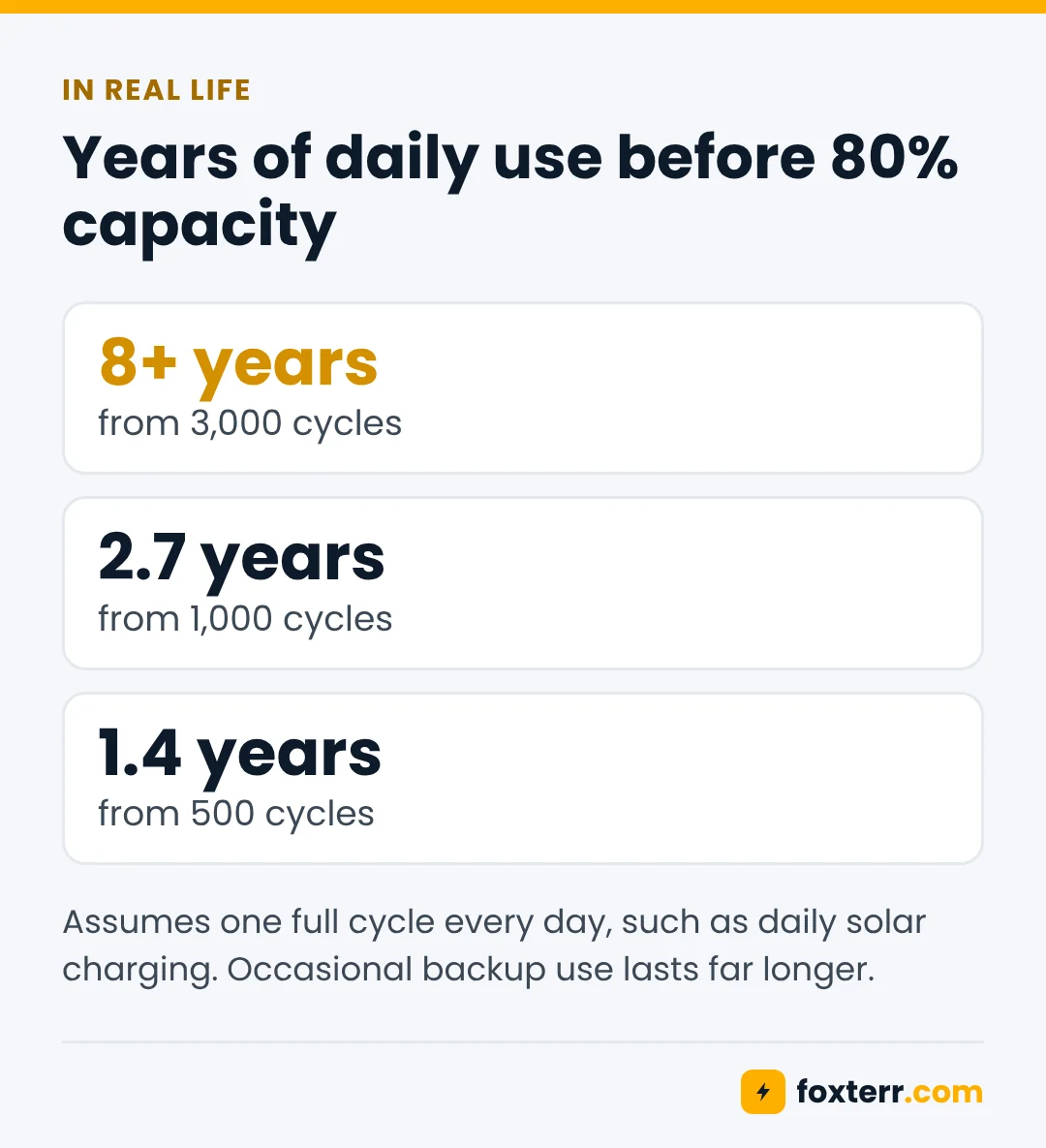
What does that mean in real life? If you cycle the battery every day, for example charging from solar, 3,000 cycles is about 8 years of use. 1,000 cycles is under 3 years, and 500 cycles is well under 2.
If you only use backup power a few times a year, both types will outlast your need. If you plan to use it often, or pair it with solar as described in our solar generator guide, LiFePO4 pays for itself.
Safety
LiFePO4 chemistry is more thermally stable than NMC, meaning it is less prone to overheating. Both types are safe when well made and protected by a good battery management system. Buy from established brands and look for recognized safety certifications such as a UL listing.
Weight and size
NMC batteries store more energy for their weight, so an NMC station is often noticeably lighter than a LiFePO4 station of the same capacity. For camping that matters. For a station that sits by the fridge until the lights go out, it matters much less.
Side by side
| LiFePO4 (LFP) | Lithium ion (NMC) | |
|---|---|---|
| Typical rated cycles | About 3,000 or more | About 500 to 1,000 |
| Heat stability | Higher | Lower |
| Weight for the same capacity | Heavier | Lighter |
| Best for | Home backup, daily solar use | Travel, hiking, light use |
How to check before you buy
- Find the battery chemistry in the specs. Look for LiFePO4 or LFP, versus lithium ion or NMC
- Check the rated cycle life and the capacity it keeps at that point
- Compare warranty length. A longer warranty usually reflects a longer lasting battery
- Work out price per watt hour, then weigh it against cycle life
- Size it right for your home with our sizing guide
Whichever type you choose, how you store it matters. Our storage and maintenance guide shows how to keep the battery healthy for years.
What 80 percent capacity really means
A battery does not die at its rated cycle count. It simply holds less energy. A 1,000 Wh station at 80 percent holds about 800 Wh. It still works, it just runs your devices for less time. Many stations keep going for years after that point with gradually reduced capacity.
Cost per cycle: a fair way to compare
Price alone can mislead. Divide the price by the rated cycles to see what each full charge really costs you. These are example prices for illustration only:
| Example | Price | Rated cycles | Cost per cycle |
|---|---|---|---|
| LiFePO4 station | $800 | 3,000 | About $0.27 |
| NMC station | $600 | 800 | About $0.75 |
If you will use it often, the cheaper station can be the more expensive one. For a unit you use twice a year, upfront price matters more.
How to make any battery last longer
- Avoid draining it to zero when you can
- Keep it out of heat. Hot garages and cars age batteries fast
- Do not charge it below freezing
- Store it partly charged for long periods, following your manual
- Partial cycles count as a fraction of a full cycle, so topping up is fine
Our storage guide covers the full routine.
Frequently asked questions
Is LiFePO4 better than lithium ion for a power station?
For home backup and frequent use, usually yes. It lasts many more cycles and handles heat better. Lithium ion NMC is lighter, which suits travel.
How many years does a LiFePO4 power station last?
Rated at around 3,000 cycles, it can deliver about 8 years of daily full cycles before dropping to about 80 percent capacity, and much longer with occasional use.
Is LFP the same as LiFePO4?
Yes. LFP is short for lithium iron phosphate, which is LiFePO4.
Why are LiFePO4 power stations heavier?
LiFePO4 cells store less energy per pound than NMC cells, so more cell weight is needed for the same capacity.
Do power station batteries lose capacity when not used?
Slowly, yes. Time and heat age every battery. Storing it cool and partly charged slows the process.
Can I replace the battery in a power station?
Usually not by yourself. Some brands offer service. Expansion batteries add capacity but do not replace the internal battery.
This article gives general information only. Always follow the safety instructions for your own equipment, and ask your doctor or equipment supplier about any medical device.