Solar generator for home backup: how it works and how many panels you need
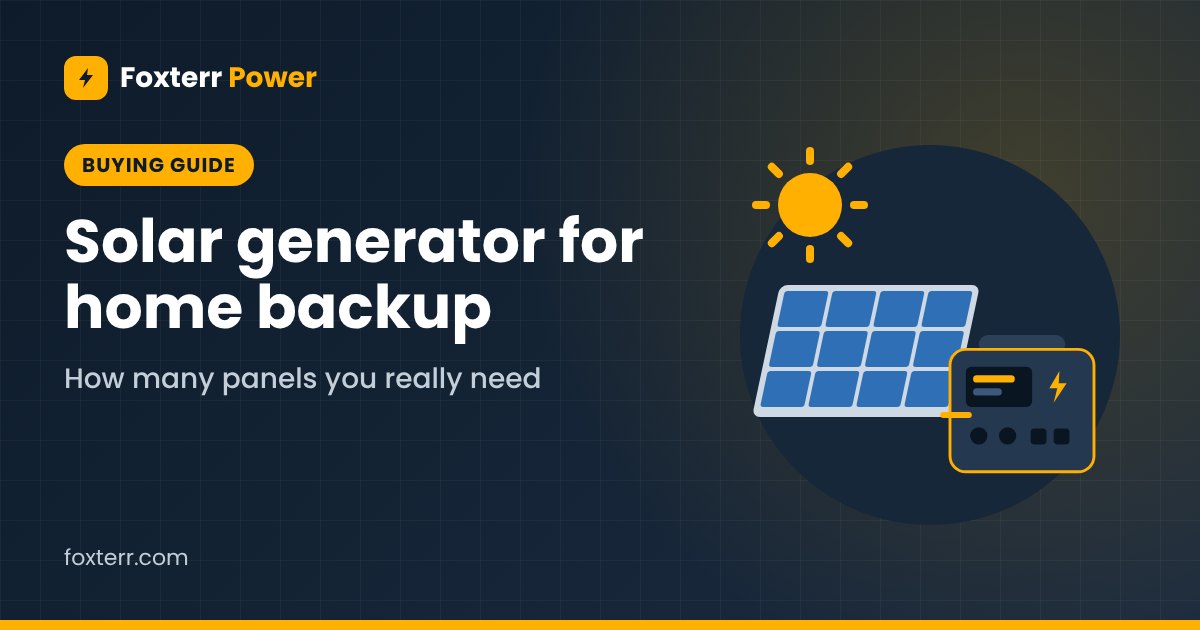
A solar generator is not a different machine. It is a portable power station paired with solar panels, so it can recharge without the grid or fuel. That makes it the quiet, fume free answer to outages that last more than a day. Here is how to size the panels so the setup actually keeps up.
Foxterr Power is reader supported. We may earn a commission when you buy through links on our site, at no extra cost to you. How we make money.
In this guide
How a solar generator works
Solar panels turn sunlight into electricity. The power station has a built in solar charge controller, usually an MPPT type, that takes that power and charges the battery. You then use the battery as normal, day or night. Nothing burns, nothing needs fuel, and it is safe indoors, unlike a gas unit. See our power station vs generator comparison.
How much power do solar panels really make?
A panel's rating, such as 200 watts, is what it produces in ideal test conditions. In real life, expect about 70 to 80 percent of that in strong, direct sun. A simple daily estimate is: panel watts × peak sun hours × 0.75.
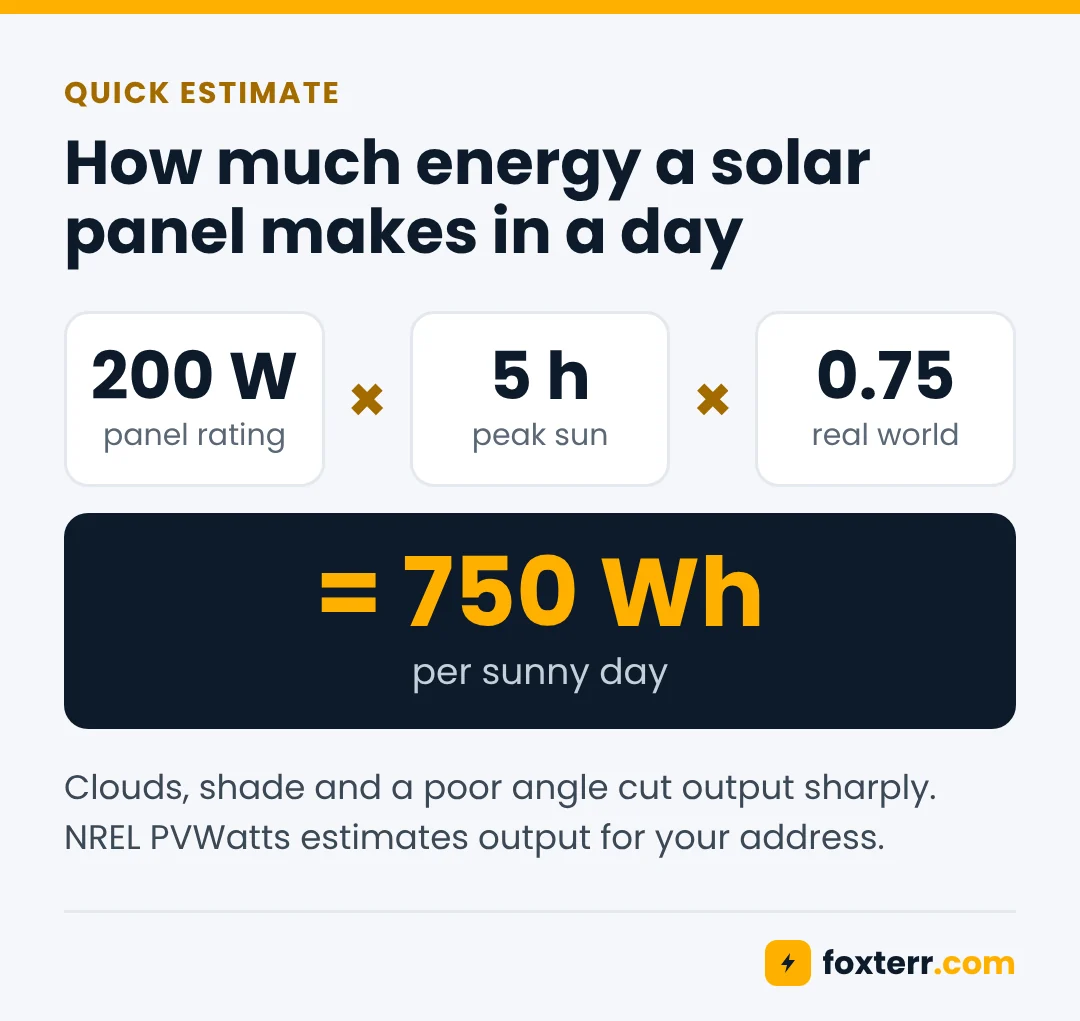
Peak sun hours change with location and season. Many US locations see roughly 4 to 6 in summer and fewer in winter. For an estimate at your own address, try NREL's free PVWatts calculator.
Clouds, shade, dirt and a poor angle cut output sharply. Even partial shade on one corner of a panel can reduce its output a lot, so placement matters as much as panel size.
How many panels do you need?
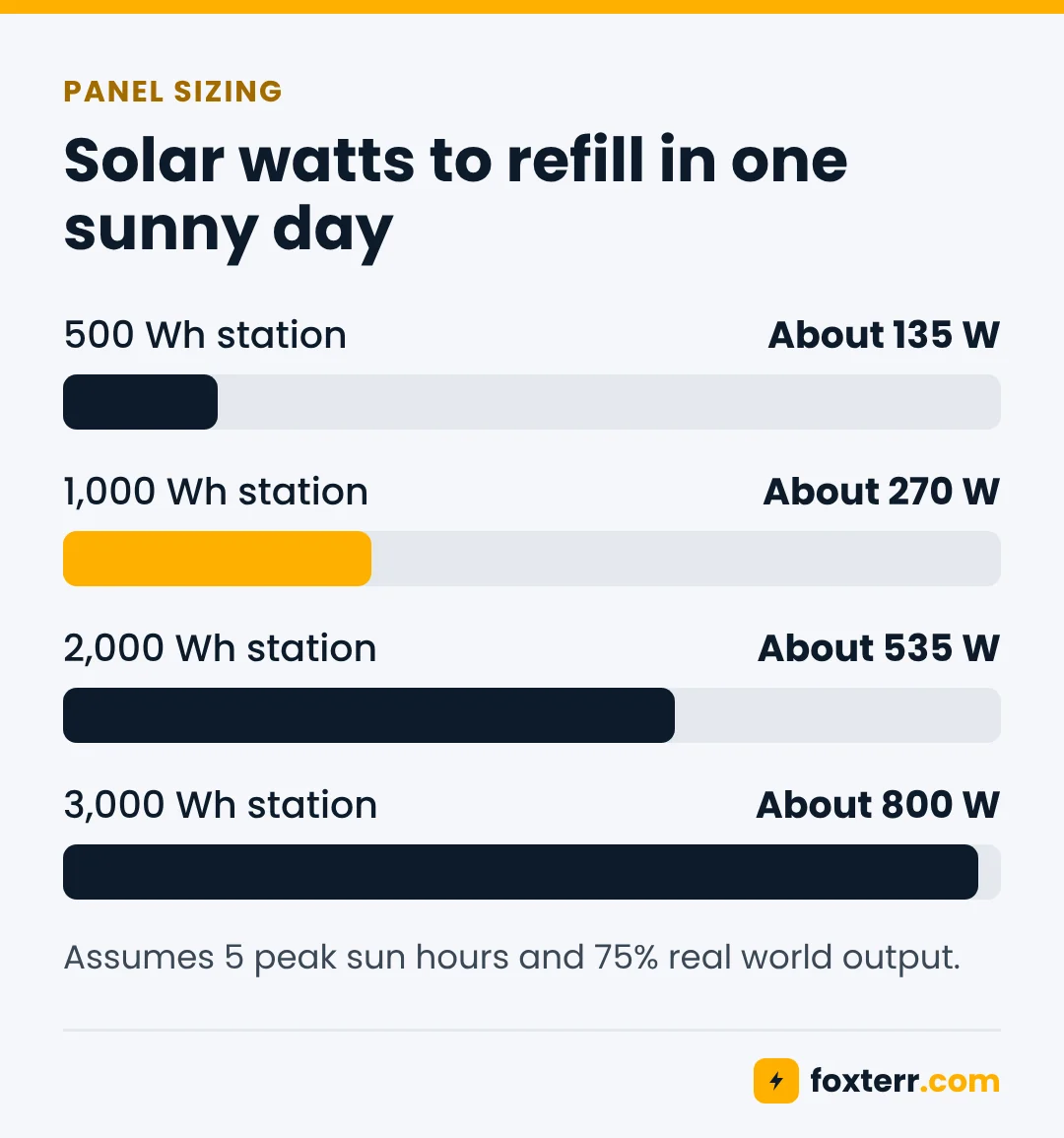
Work backwards from your power station's capacity. To refill a station in one sunny day with about 5 peak sun hours, you need roughly this much solar:
| Power station capacity | Solar watts to refill in a sunny day |
|---|---|
| 500 Wh | About 135 W, so one 200 W panel |
| 1,000 Wh | About 270 W, so one or two 200 W panels |
| 2,000 Wh | About 535 W, so three 200 W panels |
| 3,000 Wh | About 800 W, so four 200 W panels |
Not sure what capacity you need in the first place? Start with our power station sizing guide.
Matching panels to your power station
- Maximum solar input (watts). Panels beyond this limit will not charge the station any faster.
- Input voltage range. Wiring panels in series raises the voltage. Going over the limit can damage the station.
- Connector type. Use the cable or adapter the maker recommends.
- Portable or fixed panels. Folding panels store easily. Rigid panels are cheaper per watt but bulkier.
Is a solar generator worth it?
- Yes, if outages in your area can last several days
- Yes, if you want backup power without storing fuel
- Yes, if you also want to cut power use day to day or take it camping
- Less so, if you have little sun, heavy shade or nowhere safe to set panels out
Panels are an add on. You can buy the power station first and add solar later. If you will cycle the battery daily from solar, choose LiFePO4, which lasts far longer. See LiFePO4 vs lithium ion. And for keeping a fridge going on sun alone, our refrigerator guide has the numbers.
Portable or rigid panels?
| Portable folding panels | Rigid panels | |
|---|---|---|
| Setup | Unfold and plug in | Need a mount or stand |
| Storage | Fold flat, easy to store | Bulky |
| Cost per watt | Higher | Lower |
| Durability | Good with care | Very durable |
| Best for | Outages, camping, renters | Permanent or semi permanent setups |
Setting up panels for the most power
- Place panels where they get full sun with no shade, even on a corner.
- In the US, face them roughly south.
- Tilt them toward the sun. Most folding panels have a kickstand for this.
- Move or adjust them two or three times a day to follow the sun.
- Keep the surface clean. Dust and pollen reduce output.
Series vs parallel in plain words
Connecting panels in series adds their voltage together while the current stays the same. Connecting them in parallel adds their current while the voltage stays the same. Your power station has limits for both, listed in its specs. Stay inside both limits. If in doubt, follow the panel combinations your power station's maker recommends.
Winter and cloudy days
Expect much less from solar in winter, when days are short and the sun sits low, and under heavy cloud. Plan a backup way to recharge, such as a car charger or a generator, if you live where winter storms cause long outages. Our power outage checklist covers winter safety too.
Frequently asked questions
Can a solar generator power a house?
A portable one can power essentials like a fridge, router, lights and phones. Powering a whole house needs a large home battery system, more panels and a transfer switch installed by a licensed electrician.
How many solar panels do I need to charge a 1,000 Wh power station?
About 270 W of panels refills it in a sunny day with 5 peak sun hours. In practice, one or two 200 W panels.
Do solar panels work on cloudy days?
Yes, but output drops sharply, often to a small fraction of the sunny day figure. Plan for slower charging in bad weather.
Can I charge a power station from solar and use it at the same time?
Most stations support this, often called pass through charging. Check the maker's specs for your model.
How long does it take to charge a power station with solar?
Divide the station's capacity by the panel watts times 0.75. A 1,000 Wh station on 300 W of panels takes about 4.5 hours of strong sun.
Can I use any solar panel with my power station?
Only if its voltage, current and connector match the station's solar input limits. Check the specs or use the maker's recommended panels.
This article gives general information only. Always follow the safety instructions for your own equipment, and ask your doctor or equipment supplier about any medical device.