Portable power station vs generator: which is better for home backup?
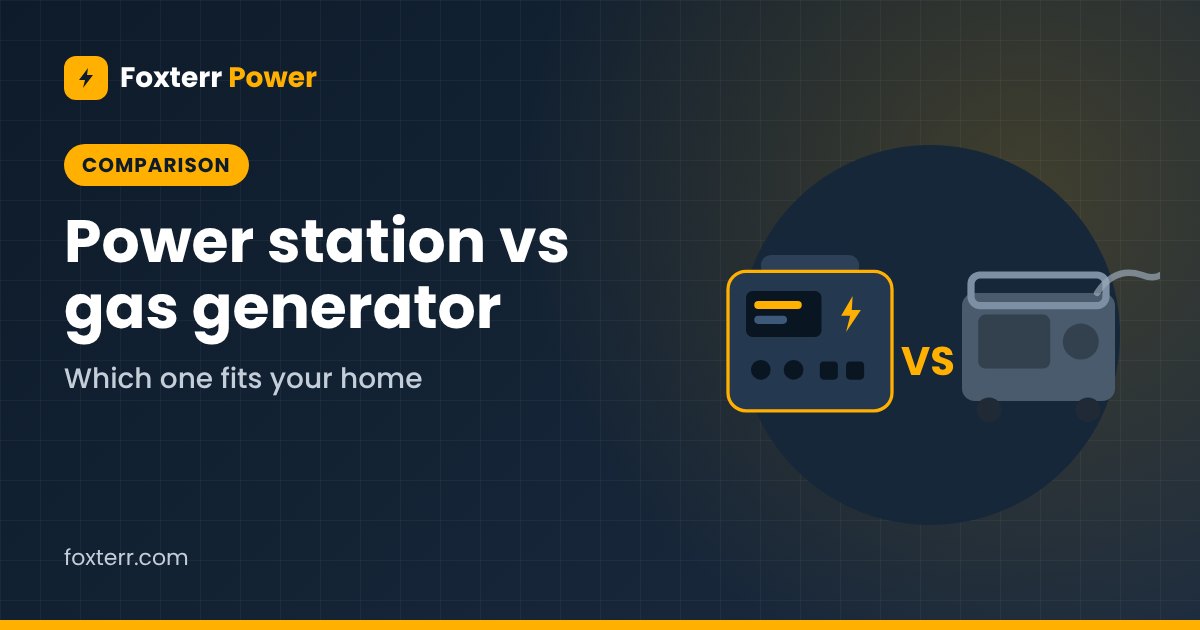
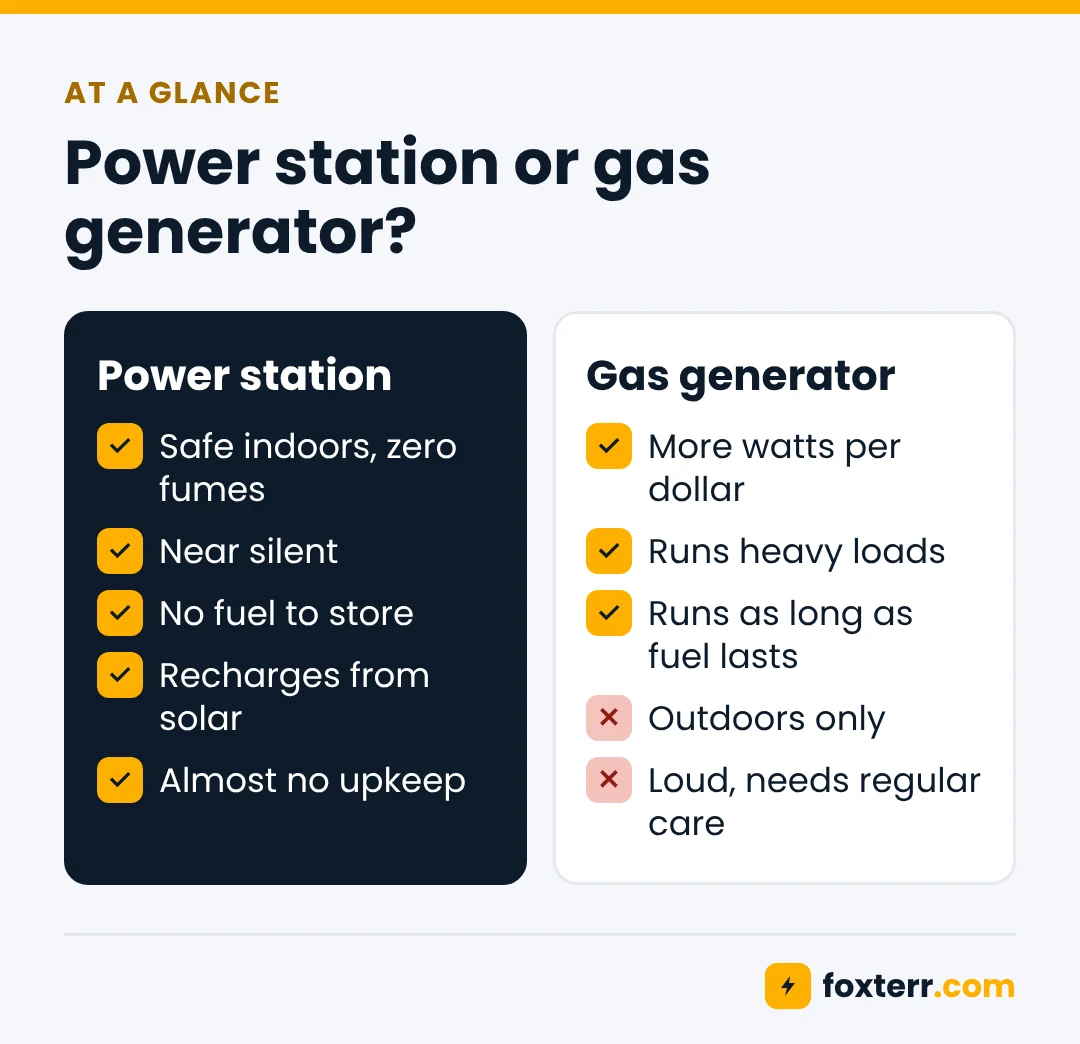
Both keep the lights on, but they suit very different homes. A battery power station is silent and safe to use indoors. A gas generator makes far more power for the money but needs fuel, space outdoors and regular care. Here is how to decide which one, or which mix, fits the way you live.
Foxterr Power is reader supported. We may earn a commission when you buy through links on our site, at no extra cost to you. How we make money.
In this guide
The short answer
Choose a portable power station if you live in an apartment or condo, mostly face outages of a few hours to a day, or need quiet power for a CPAP or other medical device at night. Choose a gas generator if you face long outages and need to run heavy loads like a well pump, electric heat or central air. Many homes end up with both.
Safety: the biggest difference
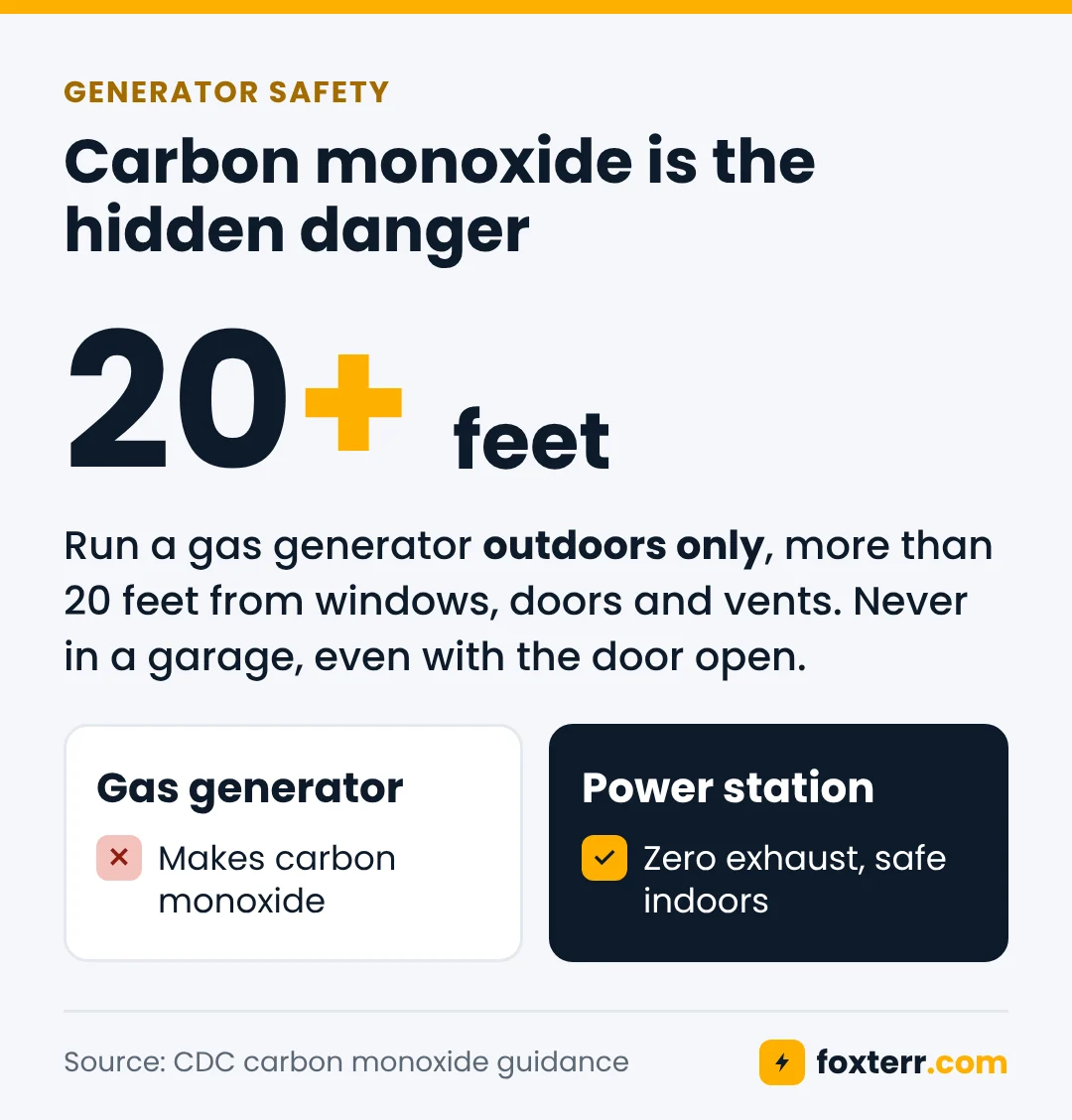
Gas generators produce carbon monoxide, which has no smell and can kill within minutes. The CDC says to use generators only outdoors, more than 20 feet from windows, doors and vents. Never run one in a garage, even with the door open.
A battery power station produces no exhaust at all. It can sit in your kitchen, living room or bedroom. For apartment dwellers, renters and anyone without a safe outdoor spot, that alone settles the question.
Run time and refuelling
A generator runs as long as you keep adding fuel, which is its big strength in a long outage. The catch: fuel can be hard to find after a major storm, and stored gasoline goes stale within months unless treated with a stabilizer.
A power station runs until its battery is empty. Add solar panels and it becomes a solar generator that can keep going for days at a low load, though output depends on the weather. Our solar generator guide explains how much power panels really make.
Power output
This is where generators win. Even a midsize portable generator can deliver several thousand watts, enough for a well pump, space heater or window AC. Most portable power stations deliver 300 to 3,000 watts, which is plenty for a fridge, router, lights and electronics but not for high wattage heating or cooling for long.
Not sure what you need? Our sizing guide shows how to add up your watts in a few minutes.
Noise
Most portable generators are loud enough to hear from the street, and some neighborhoods and HOAs limit when they can run. Inverter generators are quieter but still clearly audible. A power station makes little more sound than a cooling fan, so you can run it overnight beside the bed.
Upkeep and long term cost
| Power station | Gas generator | |
|---|---|---|
| Upfront cost per watt | Higher | Lower |
| Fuel | None, or free sunlight | Gasoline, propane or both |
| Maintenance | Charge every few months | Oil changes, spark plugs, fuel stabilizer, regular test runs |
| Indoor use | Safe | Never |
| Noise | Near silent | Loud |
| Best for | Essentials, apartments, medical devices | Heavy loads, long outages |
A generator costs less to buy for the power it gives you, but it needs regular attention. A power station costs more up front but asks for almost nothing beyond a top up charge every few months. Our storage guide covers that simple routine.
Which should you buy?
- Apartment, condo or rental: power station
- Outages of a few hours to a day: power station
- CPAP or other medical device at night: power station. See our CPAP backup guide
- Long outages with a well pump or electric heat: gas generator or a large home battery system
- Both worlds: a power station for quiet hours and essentials, and a generator for heavy loads and recharging
Whatever you choose, prepare the rest of your home too. Our power outage checklist covers food, water, light and safety.
What about inverter generators?
Inverter generators are a quieter, cleaner running type of gas generator. They produce stable power that is safer for electronics and they throttle down at light loads, which saves fuel. They still burn fuel and still produce carbon monoxide, so every outdoor safety rule above applies.
Dual fuel and propane
Many generators can run on propane as well as gasoline. Propane stores for years without going stale, which solves the fuel aging problem. It gives slightly less power than gasoline in most models, and you need a safe place outdoors to keep the tanks.
Connecting backup power to your home
Never plug a generator or power station into a wall outlet to feed power back into the house. This is called backfeeding, and it can injure utility workers and damage your wiring. To power home circuits directly, you need a transfer switch or power inlet installed by a licensed electrician. For most people, running extension cords from a power station to the devices that matter is simpler and safer.
How many homes use both
- The power station runs the router, lights, phones and CPAP quietly overnight.
- In the daytime, the generator runs outdoors for a few hours to cool the fridge and freezer and to recharge the power station.
- The generator shuts off at night, so the household sleeps without noise or fumes.
This setup uses far less fuel than running a generator around the clock, and it keeps the most important devices on silent, indoor power. Pair the power station with solar and you may not need the generator at all for short outages.
Frequently asked questions
Is a portable power station better than a generator?
It is better for indoor use, quiet operation and low upkeep. A generator is better for heavy loads and very long outages. The right choice depends on your home and what you need to power.
Can I use a power station indoors?
Yes. A battery power station produces no fumes, so it is safe indoors. Keep its vents clear and follow the maker's instructions. Never run a gas generator indoors.
Can a power station run a refrigerator?
Yes, if its output and surge rating are high enough. Most fridges need about 500 W of continuous output with room for the startup surge. See our fridge guide.
What is a solar generator?
It is a portable power station paired with solar panels, so it can recharge without fuel or the grid. Read what a solar generator is.
Can I charge a power station with a generator?
Yes. Most power stations charge from a standard AC outlet, including a generator outlet. An inverter generator is the gentler choice for electronics.
Do I need a transfer switch for a power station?
Only if you want to power home circuits directly. For plugging in devices with cords, no. Any connection to home wiring must be installed by a licensed electrician.
This article gives general information only. Always follow the safety instructions for your own equipment, and ask your doctor or equipment supplier about any medical device.