How to store a portable power station so it is ready when the power goes out
A power station that sits forgotten in a closet can be half empty when the lights go out. A few minutes every few months keeps it ready, and the right storage habits help the battery last for years. Here is the routine.
Foxterr Power is reader supported. We may earn a commission when you buy through links on our site, at no extra cost to you. How we make money.
In this guide
The right charge level for storage
Many makers recommend storing a power station partly charged, often somewhere between 50 and 80 percent, to reduce wear on the battery. Some models are designed to stay plugged in and manage their own charge. Your manual has the right number for your model, so follow it first.
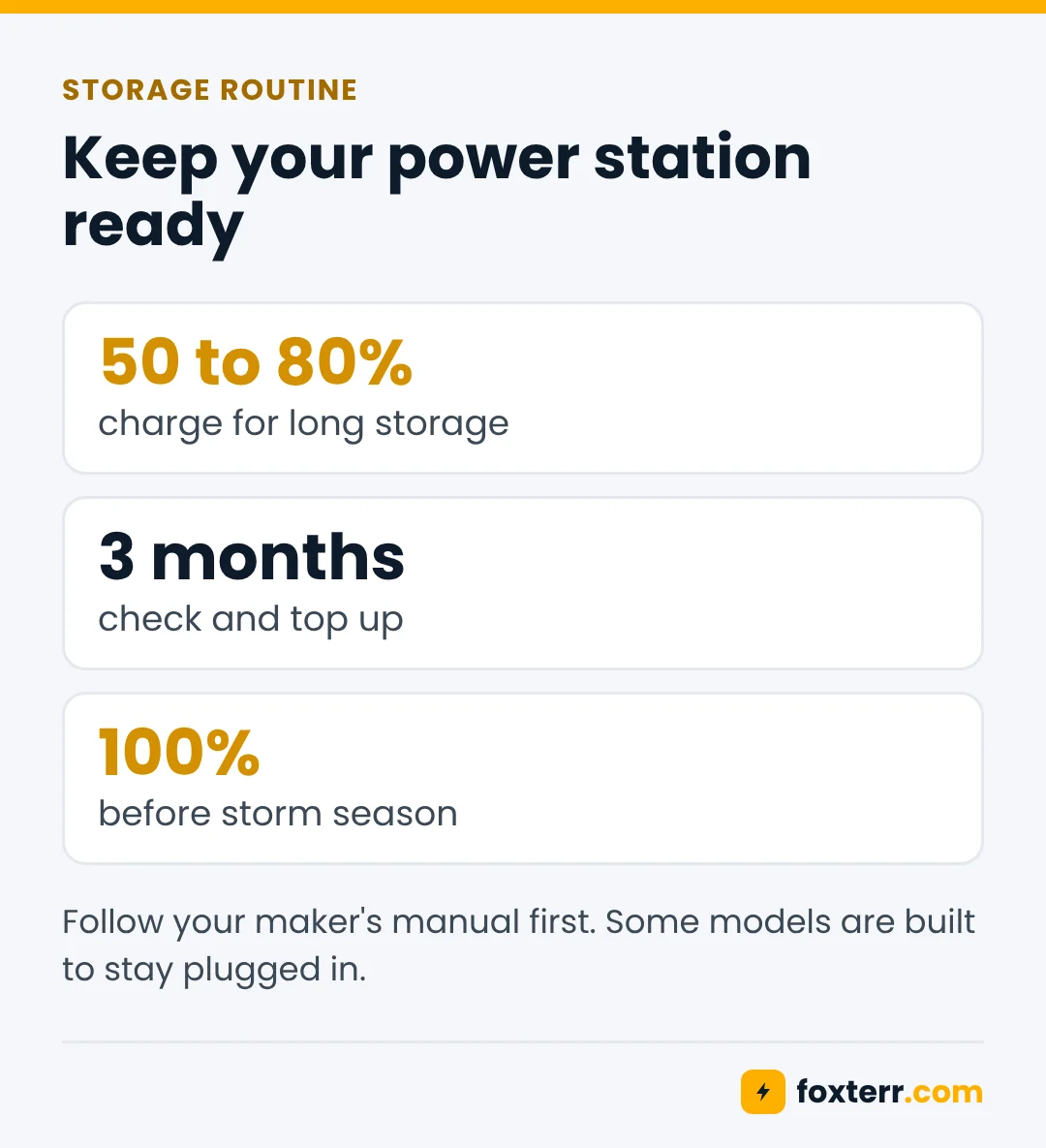
Batteries slowly lose charge even when switched off. Check the level every three months and recharge it if it has dropped. Before storm season, charge it to 100 percent.
Should you keep it plugged in?
It depends on the model. Stations with a UPS or pass through mode are often built to stay plugged in, powering a router or CPAP and taking over when the grid fails. Others are better unplugged once full. Check the manual. If it says nothing, unplug it once charged and top it up every few months.
Temperature matters most
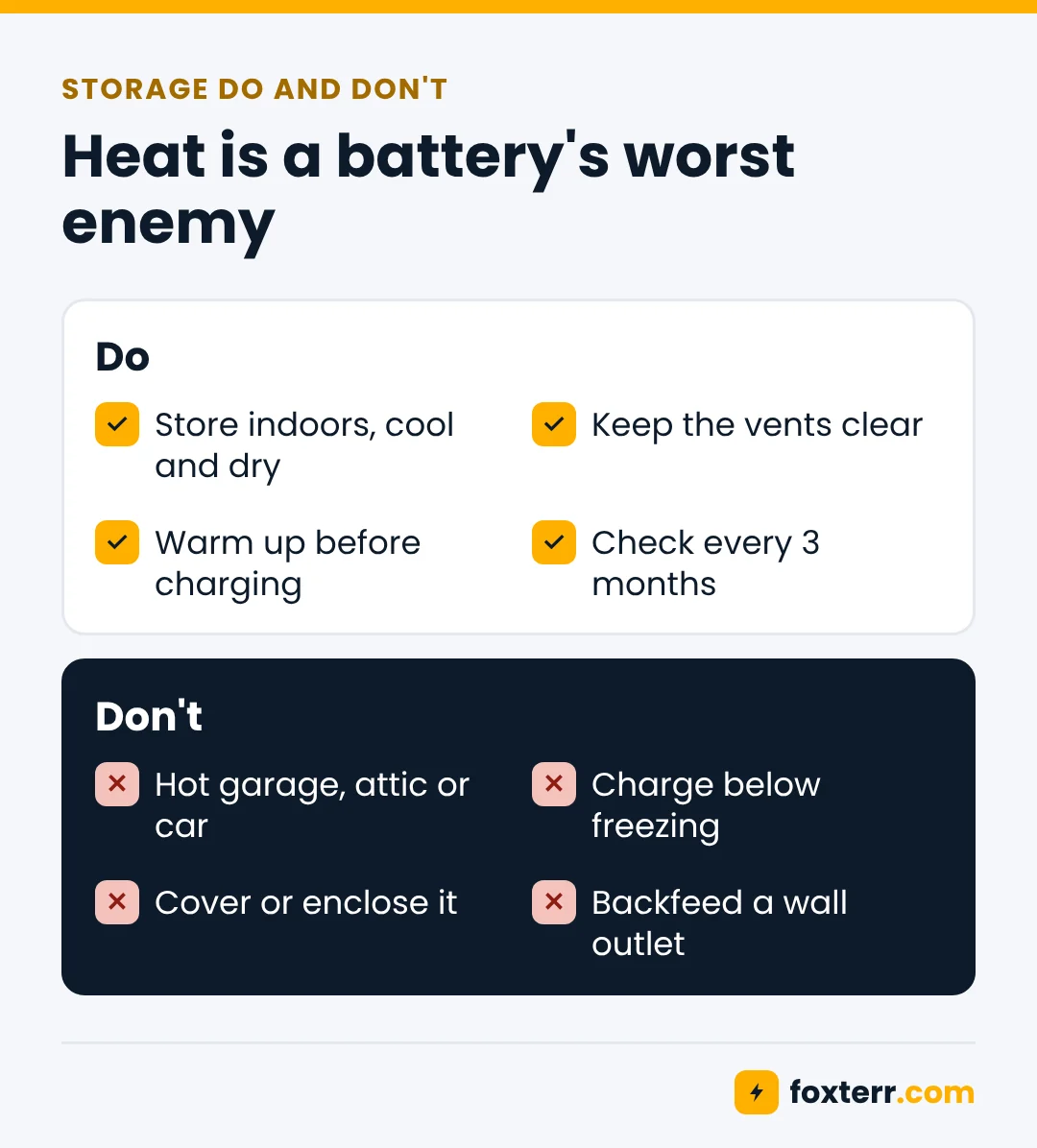
- Store it indoors in a cool, dry place
- Avoid hot garages, attics and cars in summer
- Most batteries should not be charged below freezing. Let a cold unit warm up indoors first
- Keep vents clear so the cooling fan can work
LiFePO4 batteries are more tolerant of heat than NMC lithium ion, but no battery likes a hot attic. Learn the difference in LiFePO4 vs lithium ion.
A 5 minute check every 3 months
- Check the charge and top it up if needed
- Run a small device from each outlet type to confirm it works
- Look over cables, panels and connectors for damage
- Install any firmware updates the maker offers through its app
- Set a phone reminder for the next check
Before storm season
- Charge the station to 100 percent
- Store cables, adapters and any solar panels together with it
- Write a short list of what you will power so you are not deciding in the dark. Our sizing guide helps
- Do a test run: plug in the fridge or CPAP and confirm it starts. See our fridge guide and CPAP guide
- Work through the rest of the power outage checklist
Safety basics
- Do not cover the unit or run it inside a closed cabinet
- Keep it dry and away from water
- Do not open the case or try to repair the battery yourself
- Never plug a power station into a wall outlet to backfeed your house. A home connection needs a proper transfer switch or inlet installed by a licensed electrician
Using UPS or pass through mode
Some stations can sit between the wall and a device, such as a router or CPAP, and take over instantly when the grid drops. If your model supports this, it is a great way to keep it charged and useful every day. Check the switchover time in the specs, keep the load well under the station's limit, and follow the maker's guidance on leaving it plugged in long term.
Signs your battery needs attention
- The case is swollen or bulging
- It gets unusually hot during light use or charging
- You notice a strange smell
- It runs out much faster than it used to
- It shows error codes that do not clear
If you see any of these, stop using the station, unplug it, move it away from anything flammable if it is safe to do so, and contact the maker.
Storing solar panels and cables
- Fold portable panels and keep them in their case
- Store cables loosely coiled, not tightly wrapped
- Keep everything in one bag or bin with the station so nothing is missing in the dark
Recycling an old power station
Never put a lithium battery in household trash or curbside recycling. Ask your local household hazardous waste program or the maker about battery recycling. Many brands and electronics stores offer take back options.
Frequently asked questions
What charge level should I store my power station at?
Many makers suggest 50 to 80 percent for long storage, then a full charge before storm season. Always follow your model's manual.
How often should I charge a power station that is not used?
Check it every three months and top it up if the level has dropped.
Can I leave a power station in the garage?
Only if the garage stays cool and dry. Summer heat and winter cold both harm batteries. Indoors is better.
How long does a power station hold its charge in storage?
Most lose a small amount each month while off. That is why a three month check is a good habit.
Is it safe to store a power station in a bedroom?
Yes, if it is a quality unit with clear vents, kept dry and away from heat sources. Follow the maker's instructions.
How do I dispose of an old power station?
Take it to a battery recycling program or household hazardous waste site, or ask the maker about take back. Never put it in household trash.
This article gives general information only. Always follow the safety instructions for your own equipment, and ask your doctor or equipment supplier about any medical device.